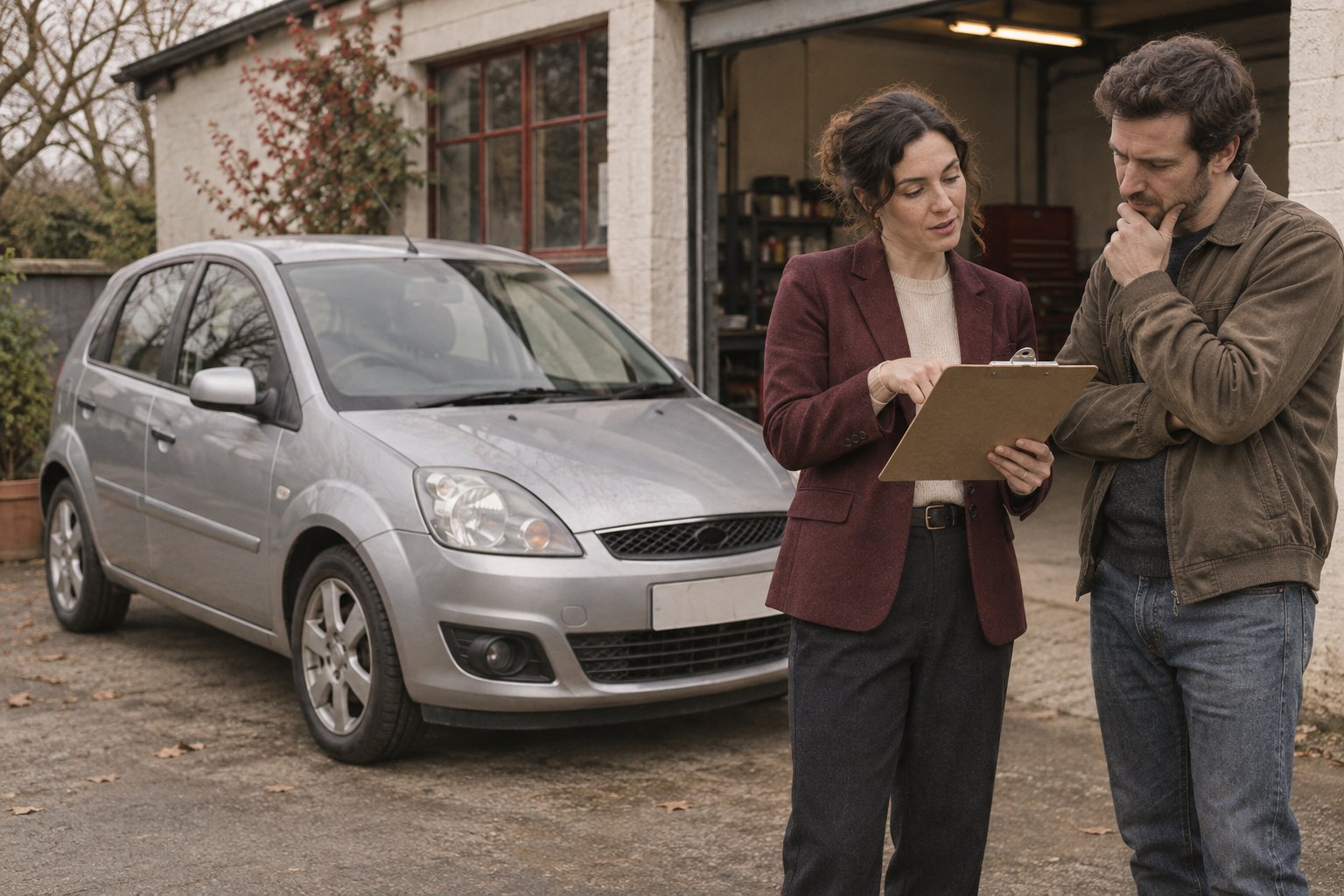
Set the conditions beforehand
Confirm the location, available time, vehicle identity and who will attend. Discuss any intended independent assessment before the visit. If documents, keys or an agreed appointment are unavailable, decide whether the visit can still answer your questions. A familiar location and a calm conversation can be useful, but neither proves the seller’s identity or the vehicle’s condition.
Observe without diagnosing
Describe what you actually saw or heard in plain language. Write “the function was not demonstrated” rather than assuming a cause. A photograph, warning light or noise may justify a professional question; it does not give an unqualified viewer a reliable diagnosis. Avoid attempting unfamiliar adjustments or tests in order to make an uncertain observation feel complete.
Keep the conversation connected to the notes
Return to the questions you prepared from the listing and records. If a seller explains a discrepancy, note the explanation and the evidence offered for it. Separate a question answered verbally from a document shown and from a point an independent assessor has checked. An orderly note is more useful than a page of confident impressions with no source.
Leave with a next action
Summarise what remains open before discussing a final decision. The next action might be a further document, an independent appointment or no further action at all. Put a cost estimate in the budget only when you know what it covers. If you take photographs with permission, avoid including private details that are irrelevant to your own decision.
Good notes describe observations; professionals assess technical causes.
Record your questions in the field checklist or work through your own cost assumptions.
For provider-specific information, use the independent CSDD Review and source notes. This article does not verify a vehicle or complete an official action.